The Ultimate Guide to 9mm Ammo: Ballistics, Bullet Types, and Top Picks for 2025
When a shooter needs a reliable round for self-defense or target practice that balances manageable recoil with effective stopping power, 9mm ammunition solves that dilemma by offering a versatile cartridge that fits most modern handguns. This rimless, centerfire round functions by igniting a primer that burns smokeless powder, propelling a jacketed bullet—typically 115 to 147 grains—at velocities around 1,100 to 1,200 feet per second. Its straight-walled case ensures smooth feeding and extraction in semi-automatic pistols, while the balanced ballistic performance delivers consistent accuracy and controlled penetration without excessive muzzle flip. For everyday carry or range sessions, 9mm ammo provides a cost-effective and widely available option that performs reliably across various bullet types, from full metal jacket to hollow points.
What Makes 9mm Luger the Most Practical Choice for Everyday Shooters
The 9mm Luger’s practicality for everyday shooters stems from its ideal balance of controllable recoil and sufficient terminal performance, making it the benchmark for defensive and range use. Because 9mm ammo is produced in massive quantities, you get consistent, affordable practice that directly translates to your carry load’s ballistics. Its shorter case and tapered design feed reliably in compact pistols, reducing malfunctions during high-stress drills. Standard-pressure 9mm loads allow faster follow-up shots than larger calibers, while modern bullet technology has closed the effectiveness gap with .40 or .45 ACP. For daily training, the lower cost per round means you can shoot twice as often, building muscle memory without fatigue. Yet, the true edge lies in choosing a 124-grain jacketed hollow point, which often cycles more smoothly than lighter 115-grain loads in short-barreled firearms. This convergence of affordability, shootability, and proven stopping power makes 9mm the default recommendation for anyone carrying or practicing .338 Lapua Ammo for Sale regularly.

Balancing Recoil, Magazine Capacity, and Stopping Power

The 9mm Luger’s dominance hinges on a genuine equilibrium between recoil management and follow-up shot speed. Its moderate impulse keeps the muzzle flat enough for rapid, accurate pairs, while still allowing double-stack magazines to hold 15–18 rounds without excessive grip bulk. Stopping power, though less than .40 or .45, remains sufficient with modern expanding loads, delivering adequate penetration and wound depth. The tradeoff is clear: lighter recoil means faster target reacquisition and higher hit probability under stress, and the capacity advantage offsets any marginal terminal performance deficit. For everyday shooters, this balance ensures more practice time, better mechanics, and a practical defense tool.
9mm’s recoil-to-capacity ratio yields faster, more accurate shooting; its stopping power is adequate for defense, making it the most balanced, practical round.
Comparing Full Metal Jacket vs. Hollow Point for Different Tasks
For everyday shooters, choosing between full metal jacket and hollow point 9mm depends entirely on the task. FMJ rounds feature a solid lead core encased in copper, feeding reliably in high-volume practice sessions while minimizing barrel fouling—ideal for target work and economical training. Conversely, hollow points expand upon impact, transferring energy into soft tissue, making them the logical defensive carry choice where over-penetration risks matter. The trade-off crystallizes in range use: FMJ’s cheaper cost allows more repetitions, while hollow points’ premium pricing reserves them for certification drills or function-testing your carry magazine. For competition, FMJ’s consistent ballistics aid quick follow-up shots, whereas hollow points excel in stress-testing your firearm’s feeding ramp under defensive pressure. Simply put, FMJ serves repetition; hollow points serve consequences.
How to Match Bullet Weight to Your Firearm’s Purpose
When I first started shooting 9mm, I grabbed whatever box was cheapest, and my groups told the truth—sloppy and inconsistent. Matching bullet weight to your firearm’s purpose starts with asking what the gun does. For a compact carry pistol, a 124-grain jacketed hollow point cycles reliably and penetrates consistently through clothing, giving you defense-grade performance without the snappy recoil of lighter loads. If you’re punching paper at the range, 115-grain full metal jackets feel soft, shoot flat, and save your wrists during long sessions. For competition, 147-grain subsonic rounds let you track your front sight through recoil, staying on target for faster follow-up shots. Barrel twist rate matters too—most Glocks and Sigs stabilize 124-grain best, while some aftermarket barrels prefer 147. Test three weights in your specific gun, then pick the one that prints the tightest group at 15 yards. Q: What weight for a steel-frame range toy? A: Start with 147-grain—the extra mass tames muzzle rise, making slow-fire drills feel like cheating.
115-Grain vs. 124-Grain vs. 147-Grain: What Each Feels Like at the Range
At the range, 115-grain vs. 124-grain vs. 147-grain: what each feels like comes down to recoil impulse and muzzle rise. The 115-grain load feels snappy and sharp, with a pronounced crack and quick, angular kick that can disturb your sight picture if your grip is loose. The 124-grain is the balanced middle ground—a firmer, more linear push that settles faster, making it ideal for tracking the front sight through recoil. The 147-grain, being subsonic, produces a softer, rolling shove rather than a snap; the slide cycles slower, which reduces perceived muzzle flip but can make the slide feel sluggish during rapid fire. You’ll notice the 147’s deeper thud and longer dwell time, which some shooters find smoother for slow, precise drills.
115-grain snaps, 124-grain pushes, 147-grain rolls—choose based on whether you prioritize speed, balance, or softness.
Selecting the Right Grain for Self-Defense vs. Target Practice
For target practice, lighter 9mm grain weights like 115 or 124 grain are optimal because they .32 Win Special Ammo for Sale produce softer recoil and lower felt muzzle flip, enabling faster follow-up shots and extended range sessions without fatigue. Conversely, self-defense demands heavier 147-grain loads, which penetrate deeper through clothing and barriers while generating slower, more controllable expansion in ballistic gel. The heavier bullet also reduces recoil impulse timing, allowing for quicker sight reacquisition under stress, whereas lighter rounds risk over-penetration in a home scenario. Match your grain to the mission: cheap 115-grain FMJ for drills, premium 147-grain JHP for carry.
- 115-grain: lowest cost https://specialtysportsandsupplyltd.com/ and recoil; ideal for volume training.
- 124-grain: balanced compromise; reliable cycling in most pistols.
- 147-grain: maximum penetration and expansion; best for defensive loads.
Understanding Pressure Ratings and Why +P and +P+ Change Performance
The 9mm Luger’s standard pressure rating is set at 35,000 psi, a benchmark that defines baseline performance. +P 9mm ammo pushes this to roughly 38,500 psi, while +P+ ammunition operates above that, often near 40,000 psi or higher. This increased pressure doesn’t just add velocity—it fundamentally changes the firing cycle. Higher pressure accelerates the bullet faster, raising muzzle energy and flattening trajectory, but it also alters recoil impulse and case expansion. Understanding pressure ratings is critical because a firearm’s chamber and locking mechanism are designed for a specific stress limit. Shooting +P or +P+ loads in a pistol rated only for standard pressure risks accelerated wear, premature unlocking, or catastrophic failure. Always verify your barrel’s proof mark and manufacturer’s rating before using these hotter loads, as the performance gain is meaningless if the gun cannot contain the force. The trade-off is simple: more pressure means more power, but it demands a stronger platform to exploit it safely.
When Standard Pressure Is Enough and When You Need Extra Velocity
Standard 9mm pressure (~35,000 psi) suffices for most defensive scenarios where shot placement trumps raw speed, such as close-range civilian self-defense. You only need extra velocity—via +P or +P+ loads—when you must defeat intermediate barriers like heavy clothing or auto glass, or when engaging from a carbine-length barrel where higher pressure amplifies bullet expansion. For practice and competition, standard pressure minimizes muzzle flip and frame wear; for duty use where overpenetration is less critical, +P delivers flatter trajectory and more reliable hollow-point expansion at extended ranges. Extra velocity becomes critical only when your target presents a physical obstacle that standard pressure cannot reliably penetrate. If your gun is a compact polymer frame, stick to standard; if it’s a heavy steel pistol and you face hard barriers, +P is justified.
Q: When is standard pressure not enough for 9mm?
A: Standard pressure fails when you need .32 ACP Ammo for Sale to defeat heavy denim, ribs, or vehicle glass beyond 15 yards—here, +P’s additional 50–100 fps ensures the bullet retains enough energy to expand and reach vital organs.
Checking Your Pistol’s Compatibility Before Using High-Pressure Loads
Before firing +P or +P+ 9mm rounds, verify your pistol’s frame, barrel, and recoil spring are explicitly rated for sustained high-pressure use. Checking your pistol’s compatibility before using high-pressure loads prevents accelerated wear, premature locking-block failure, or slide cracking in older or 6.8 SPC Ammo for Sale alloy-framed models. Consult your owner’s manual for a formal +P designation; if absent, assume standard-pressure-only. For +P+, no SAAMI standard exists, so require manufacturer confirmation—not just anecdotal forum reports—that your specific model tolerates the extra bolt thrust. Inspect for proof marks or customer-service statements. A compatible pistol will also cycle reliably with stiffer springs, while an incompatible one may exhibit excessive muzzle flip or erratic ejection.
- Check the barrel’s fully supported chamber; unsupported ones risk case bulging.
- Replace recoil springs at shorter intervals after high-pressure use.
- Measure slide-to-frame fit; loosening indicates over-stress.
- Confirm warranty coverage does not exclude +P+ damage.
Tips for Buying in Bulk Without Sacrificing Quality or Function
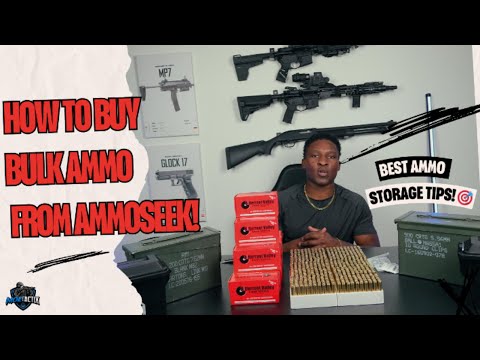
When you’re stacking 9mm deep, the trick is to check the lot number and buy from a single batch to keep your point of aim and recoil consistent. Stick with reputable loaders—like brass-cased, new or once-fired—and avoid mystery reman that could stovepipe in a defensive gun. Test a 50-round box first, then commit to the case if it feeds clean in your specific pistols. Rotate your stock by shooting the oldest first so primers and powder stay fresh. Pro move: seal your bulk cans with desiccant packs to beat humidity. Q: Is it okay to mix new and reman in bulk? A: Yes, but only if the reman comes from a vetted source and matches your velocity testing—otherwise keep them strictly separate for practice.
Spotting Reliable Brass-Cased vs. Steel-Cased Options for Range Days
For range days, sorting reliable brass from steel starts with a quick visual and magnet check. Brass cases, like Federal or Blazer, show a warm gold hue, resist corrosion, and reliably expand to seal the chamber, which cuts down on gas blowback and extraction failures. Steel, often lacquered or polymer-coated—think Barnaul or Tula—can be lighter and cheaper, but a magnet sticking to the case is your red flag. To spot a dependable steel option, avoid scratched or flaking coatings that jam extractors. For a fast field test: check the primer pocket for tight seating, then inspect case mouths for cracks, and finally run a fingernail over the rim to feel for burrs.
How to Store Large Quantities to Prevent Corrosion and Misfires
When buying 9mm in bulk, you 6.5x57mm Mauser Ammo for Sale must control moisture to prevent corrosion and misfires. Store ammunition in sealed, airtight metal or polymer cans with desiccant packs, avoiding basements or garages where humidity fluctuates. Keep the containers off concrete floors and in a climate-controlled space, ideally below 70°F with stable humidity. Rotate your stock, shooting the oldest rounds first, and inspect for tarnished cases or primers before reloading your gear. For long-term storage, vacuum-sealing individual boxes adds a barrier against oxidation. Crucially, avoid temperature swings that cause condensation inside the package, as this directly degrades primer compound and powder, leading to ignition failures. **Proper bulk ammunition storage** ensures every round fires reliably when it matters most.
Common Malfunctions and How to Avoid Them With Proper Ammo Selection
In 9mm platforms, common malfunctions like stovepipes and failures to feed often stem from weak ammunition that fails to cycle the slide with enough force, particularly in compact or recoil-spring-heavy pistols. Selecting full-power 9mm loads with a muzzle velocity above 1,100 fps from reputable manufacturers ensures reliable extraction and chambering. Conversely, underpowered or reloaded rounds can cause short-stroking, leading to double feeds. For suppressed or competition pistols, choosing the correct bullet weight—typically 115 or 124 grain—prevents excessive fouling and ensures proper gas pressure. Additionally, using jacketed hollow points over flat-nosed lead rounds reduces the risk of snagging on feed ramps, which 6.5x57R Ammo for Sale is a leading cause of jams. Always verify your firearm’s minimum power factor and avoid subsonic ammo unless your setup is tuned for it, as proper 9mm ammo selection directly prevents cycling failures.
Preventing Feed Failures, Light Strikes, and Over-Penetration Issues
To prevent feed failures, match bullet profile to your barrel’s feed ramp; round-nose or flat-point 9mm rounds feed more reliably than sharp hollow points in tight chambers. 6.5×55 Swedish Ammo for Sale Light strikes often stem from hard primers—select ammunition with sensitive primer compounds from reputable manufacturers, especially for striker-fired pistols. Over-penetration is controlled by choosing jacketed hollow points (JHPs) with controlled expansion, not full metal jacket (FMJ), for defensive loads. Verify your pistol’s minimum power factor by testing a box of each candidate load, as weak recoil springs can cause both stovepipes and double-feeds. Avoid reloaded or mixed-headstamp ammo, which increases tolerance variability and strike failures. For over-penetration, compare 124-grain JHP versus 147-grain subsonic—the former expands faster, the latter penetrates deeper before expansion.

Why Primer Hardness and OAL (Overall Length) Matter in Your Magazine
Primer hardness directly influences whether your 9mm round fires reliably in your magazine-fed pistol. A hard military-spec primer, common in surplus or steel-cased ammo, can fail to ignite under your firearm’s striker spring, causing a click instead of a bang and leaving you to clear a dud while the next round jams. Conversely, correct overall length for your magazine prevents feeding failures: if your 9mm cartridge is too long, it will bind against the magazine’s internal walls or the feed ramp, while a too-short round can shift forward under recoil, .35 Remington Ammo for Sale causing a misfeed or double-feed. Always verify OAL against your specific magazine’s max usable length—typically 1.169 inches for 9mm—and choose primers rated for your hammer or striker’s force.
- Soft primers ensure reliable ignition even with lighter striker springs.
- Excess OAL over 1.169 inches risks nose-diving or catching on the feed lips.
- Short OAL allows Ammunition for Sale the bullet to slip out of the case neck under recoil, altering chamber pressure.
- Test a full magazine of your chosen 9mm lot before relying on it for carry or competition.
Zeroing Your Sights and Testing Accuracy With Different Loads
Zeroing your sights with 9mm ammo begins at a fixed distance, typically 10 or 15 yards, using a single lot of ammunition to establish a baseline. Because 9mm loads vary in bullet weight and velocity, your point of impact will shift between 115-grain and 147-grain rounds. Testing accuracy with different loads requires firing consistent five-shot groups from a supported rest, recording each group’s center, and then adjusting your sights only after confirming a repeatable pattern. Shoot three groups per load to separate shooter error from ammunition variance. Once your zero is set for your primary defensive or competition load, verify it with a second batch to see if the shift is acceptable for your intended engagement distances. Always let the barrel cool between groups, as heat can alter 9mm pressure and stringing. Finalize your zero with the load you will actually carry, not the cheapest practice round.
Finding the Most Accurate Load for Your Barrel Twist Rate
For 9mm barrels, twist rate dictates the spin stabilizing a given bullet’s length and weight, so matching bullet weight to twist rate is the first variable in load accuracy. A 1:10 twist stabilizes 115–124 grain rounds predictably, while 147 grain subsonics often require slower twists like 1:16 to avoid over-stabilization and yaw. To isolate the best load, fire five-shot groups of each weight, seating depth, and powder charge—starting at the manufacturer’s minimum and incrementing 0.2 grains—while logging group diameters. Chronograph velocity to confirm the load’s stability window, then retest the top two candidates at 25 yards to confirm consistency. If groups tighten with lighter bullets, your barrel favors faster twists; if heavier bullets print tighter, adjust your load selection accordingly.
Simple Drills to Confirm Point of Impact at 10, 15, and 25 Yards
To lock in your zero, start at 10 yards with a sandbag rest, firing a three-round group at a one-inch dot; if the impact strays, adjust the rear sight in the direction you want the bullet to move. Move to 15 yards and repeat, but now fire five rounds standing, focusing on a slow, steady trigger press to confirm the holdover remains consistent with your 9mm loads. Finally, at 25 yards, shoot another five-round group from a modified prone or braced position; this distance exposes any flinch or sight misalignment. These simple drills to confirm point of impact are your fastest path to trusting your pistol’s trajectory with defensive ammunition.